Siemens will invest more than €1 billion in industrial AI over the next three years. The commitment was set out in November 2025 alongside the company’s Siemens ONE Tech Company program, and it is part of a wider European push: Siemens, ABB and Schneider Electric are all racing to convert decades of accumulated production-line data into factories that configure, run and improve more of their own operations. For companies that buy and hold industrial spare parts, the direction matters: automation product families are likely to iterate faster, and sourcing plans should account for it.
| Company | Industrial AI move | Numbers announced |
|---|---|---|
| Siemens | ONE Tech Company program; Eigen Engineering Agent for PLC, HMI and device configuration | €1bn over three years; up to 50% engineering efficiency in pilots |
| ABB | Physical AI in robotics; AI-run production at its Shanghai super factory | +20% painting efficiency; doubled capacity; 36% lower operating cost |
| Schneider Electric | AI embedded across EcoStruxure products, machines, processes and energy systems | Open automation ecosystem with partners and universities |
What Siemens announced
The €1 billion figure anchors the ONE Tech Company program, presented on 13 November 2025, which also targets doubling digital business revenue by 2030. Siemens says it employs more than 1,500 AI specialists and holds more than 2,000 AI patent families.
The first flagship product followed at the Hanover Fair: the Eigen Engineering Agent, an AI system that plans and executes automation engineering tasks inside the TIA Portal environment rather than only suggesting them. It writes PLC code, builds HMI screens and configures devices, iterating until predefined performance benchmarks are met. In pilot deployments with more than 100 companies across 19 countries, Siemens reports engineering efficiency gains of up to 50 percent and execution two to five times faster than manual workflows.
For engineers, that changes where time goes: routine PLC and HMI work moves to the agent, while validation and system-level design stay with people. The tool is available to TIA Portal’s installed base of more than 600,000 users, the same engineers who commission the PLC modules and drives that run today’s lines.
Why Europe is betting on industrial AI
European industry missed the wave of consumer-facing AI models, and its large manufacturers are now betting that the next round will be decided where they already hold an advantage: on the factory floor. Reporting by Bloomberg and the Financial Times in October 2026 describes how Siemens, ABB and Schneider Electric intend to use decades of accumulated production data to lead in industrial AI, a field that mines the data generated by production lines and applies it to daily operations.
Siemens board member Peter Koerte told Fortune that the company plans to invest more than €1 billion in industrial AI over three years, naming industrial process AI as one of the areas where Europe can lead. On a similar horizon, Germany signed an agreement with NVIDIA to develop advanced models for physical AI, BMW partnered with Mistral AI on crash simulation and digital twins, and ArcelorMittal expanded its work with Microsoft to apply AI across its global operations.
ABB and Schneider Electric are moving in parallel
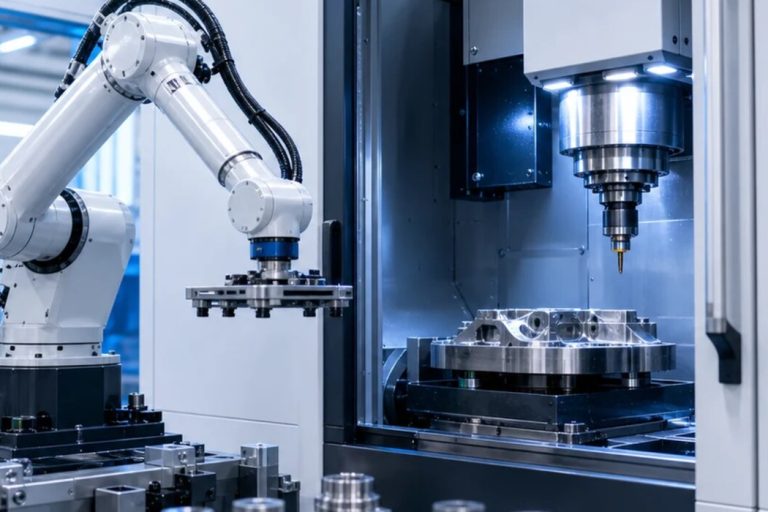
ABB‘s position comes through robotics. At the China International Industry Fair in Shanghai, ABB Robotics president Marc Segura framed the shift as a change in what defines a robot: the next era of industrial automation will be measured by how quickly robots learn, not by how they are programmed. The company’s Shanghai super factory, which builds ABB’s own industrial robots, received China’s level-4 smart manufacturing certification, and its AI-controlled spray booth has raised painting efficiency by 20 percent while doubling capacity and cutting operating costs by 36 percent.
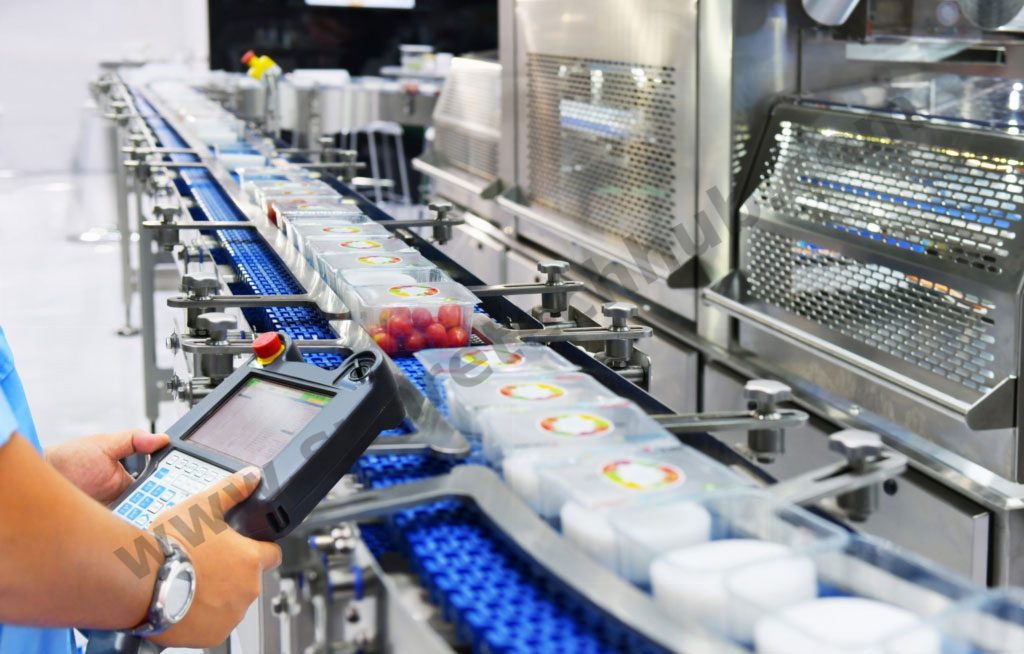
Schneider Electric‘s chief executive has said AI is being embedded into products, machines, processes and energy systems, and the company is pushing that integration through its EcoStruxure architecture and an open automation ecosystem built with partners, universities and customers. At the same fair, Schneider’s industrial AI team showed both progress and limits: one chemical customer wanted to optimize an energy asset and found at least five devices with near-identical names in its database, making the data unusable until naming was fixed.
From automation to autonomy
The end state these companies describe is autonomy. Industrial AI developers envision handing a product design to a model that proposes the manufacturing plan, designs the required tooling, lays out the production cell and then coordinates machines and robots from assembly to packing.
Nobody in the industry expects that without guardrails. ABB’s robotics leadership has been explicit that industrial AI must be safe, reliable and reproducible, because a hallucinated instruction on a physical line is far more serious than a wrong chatbot answer. Siemens built validation into the Eigen workflow the same way: generated code is tested against simulation models and reviewed by an engineer before it reaches live equipment. The near-term bottleneck is not model quality but data quality, since duplicated device names, closed vendor systems and unlabeled historical records are common on real plants.
What faster product cycles mean for spare parts
For the spare-parts market, the practical consequence is acceleration. When engineering effort stops being the constraint, manufacturers can refresh control families more often, and obsolescence arrives earlier for hardware already in service. Buyers can respond in three ways: document the installed base now, including firmware and hardware revisions; qualify a second source for long-lead items such as HMI and touch panels; and keep critical spares for assets that will outlive their product families. Our ABB Advant and robotics spares guide shows what that documentation looks like for one installed base.
Sources
- Siemens AG press release: “Siemens enters next stage of growth with its ONE Tech Company program”, 13 November 2025.
- Siemens AG press release: “Siemens brings AI to the physical world with Eigen Engineering Agent”, Hanover Fair.
- Bloomberg and Financial Times reporting on European industrial AI investment, October 2026.
- Fortune interview with Siemens board member Peter Koerte, October 2026.
- Reporting from the China International Industry Fair 2026 (ABB Robotics, Schneider Electric).