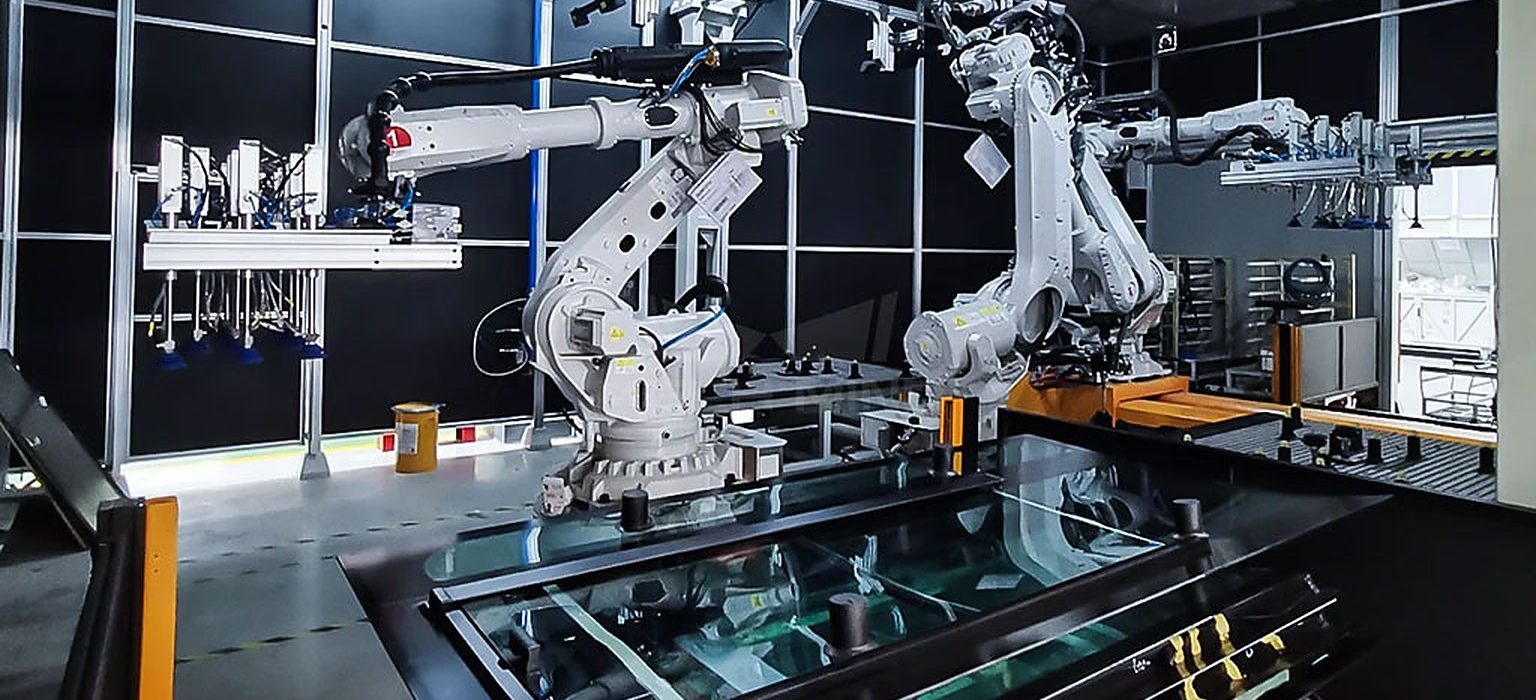
Yaskawa Electric restored three websites on 26 October 2026 at 14:50 JST, ending a suspension that its own notice attributes to a PHP vulnerability. The three are the Japanese corporate site (www.yaskawa.co.jp), the global site (www.yaskawa-global.com) and e-Mechatronics (www.e-mechatronics.com) — the product and technical information portal where Yaskawa keeps its catalogues, manuals, CAD outline drawings, selection tools and the discontinued-model replacement list. The company states that it found no unauthorised access, data leakage or other damage.
For anyone who buys spares for a Yaskawa servo axis, inverter or robot controller, that third site is the operationally interesting one. It is where a maintenance desk checks whether an order code is still current, which successor model Yaskawa itself recommends, what the mounting envelope and terminal map look like, and how to raise a send-back repair or order a substitute unit. When the portal went dark, those four checks went dark with it, and no alternative channel was announced.
Our conclusion before the detail: treat a vendor website as a genuine single point of failure in your maintenance process, in the same way you treat a control transformer or a spare amplifier. The mitigation is not a faster patch cycle at the vendor — you cannot schedule someone else’s change window. It is an offline copy of the documents you actually act on, a cross-reference you own, and a quoting route that does not depend on a foreign web tier. Below is what the public record supports, what it does not, and the seven steps we would run this week.
Key takeaways for buyers
- Yaskawa’s restoration notice is timestamped 26 October 2026, 14:50 JST and names three sites, plus partner-related sites that came back “with some functions temporarily limited”.
- The notice attributes the suspension to a PHP vulnerability but publishes no CVE identifier, no PHP version, no root cause and no start date for the outage.
- The underlying flaws are CVE-2026-109618 and CVE-2026-109619, both rated CVSS v4.0 9.2, fixed in PHP 8.5.12, 8.4.27, 8.3.36 and 8.2.35.
- CISA listed both in its Known Exploited Vulnerabilities catalogue on 26 October 2026 — the same day Yaskawa published its notice — with a US federal remediation due date of 29 October 2026.
- “PHP2Shell” is a media nickname for this vulnerability pair. It does not appear anywhere in Yaskawa’s notice, and Yaskawa never used it.
- We hold no Yaskawa stock. The in-stock parts linked in this article cover the same machine function on other brands; none of them is offered as a drop-in equivalent to a Yaskawa order code.
What Yaskawa actually published
The notice is short, and it is worth reading literally. In English, on both the Japanese and the global site, it says the websites “which had been suspended due to a PHP vulnerability, have now been restored after the necessary countermeasures were applied and their safety was confirmed”, and adds: “We have found no unauthorized access, data leakage or other damage caused by exploitation of this vulnerability.” It then lists the three restored sites, notes that partner-related sites resumed with limited functions, and apologises for the inconvenience.
| Item | What the record supports |
|---|---|
| Vendor statement on cause | “suspended due to a PHP vulnerability” — no further technical detail |
| Vendor statement on damage | “no unauthorized access, data leakage or other damage caused by exploitation of this vulnerability” |
| Sites restored | www.yaskawa.co.jp, www.yaskawa-global.com, www.e-mechatronics.com |
| Partner-related sites | resumed “with some functions temporarily limited” |
| Notice timestamp | 26 October 2026, 14:50 (JST) |
| Vulnerability identifiers | CVE-2026-109618 and CVE-2026-109619 (PHP Group / PHP), per CISA |
| Severity | CVSS v4.0 9.2 for both, in PHP’s own security release |
| Fixed PHP branches | 8.5.12, 8.4.27, 8.3.36, 8.2.35 |
| CISA KEV | both added 26 October 2026; federal due date 29 October 2026; forensic triage required; ransomware use “Unknown” |
| Outage start date | not published by Yaskawa |
| Product firmware impact | not addressed; the notice concerns websites only |
What the notice does not say
The gaps matter more than the text, because they are the questions a maintenance or IT lead will ask next.
- No CVE numbers. Yaskawa does not name the vulnerability, so a reader cannot map it to their own PHP estate without going to PHP or CISA.
- No version or branch. Whether the sites ran PHP 8.1 or 8.3, and what they are now, is not stated.
- No start date. There is no suspension notice in the corporate newsroom listing — the restoration notice is the only entry about the incident, so the outage duration is inference, not disclosure. The public technical record runs from the PHP security release on 21 October to the restoration on 26 October: a five-day gap.
- No root cause or compromise assessment. “Safety was confirmed” is a conclusion, not a method. Whether that meant log review, file-integrity checks or an external assessment is not said, and the no-damage finding is a vendor statement rather than an independent audit.
- No product-side advisory. Nothing in the notice tells a plant running Σ-7 amplifiers, GA700 inverters or MOTOMAN controllers whether any embedded web server in the product line is in scope. For that you need the vendor’s product-security channel, not the website notice.
Which workflows went dark with the portal
e-Mechatronics is not a brochure site. It is the working toolchain around Yaskawa’s motion and drive products, and it sits behind a membership login. We re-checked the pages below on 28 October 2026 and all were reachable; we did not observe their state during the suspension, so the impact column is our reading of what a spares desk loses when each one is unavailable.
| Portal function | What sits there | What a blackout costs a spares desk |
|---|---|---|
| Discontinued models and recommended replacements | the cross-reference from an obsolete order code to the successor Yaskawa names | highest-risk item: buyers guess, or order an obsolete code that no longer ships |
| Substitute and spare unit sales | the route to buy or borrow a loaner drive or amplifier | no vendor loaner path while a line is down |
| Send-back repair | RMA process, shipping instructions, turnaround terms | the repair queue stalls at the intake step |
| Catalogues, manuals, CAD and outline drawings | ratings tables, terminal maps, mounting envelopes, wiring diagrams | retrofit checks stop; you cannot verify a footprint against a candidate alternate |
| Support tools and technical documents | setup software, parameter files, application notes | commissioning and fault-finding references are unavailable at the moment they are needed |
| Membership area and login | account, saved selections, entitlement to ordered documents | you cannot even prove what you are entitled to download |
Note that the first row is the one with a direct money consequence. A discontinued-to-current cross-reference is the document that prevents a wrong-part order on an axis that has been in service for a decade, and it is a lookup, not a download — you cannot keep a useful offline copy of a list that changes.
The patch week, in order
| Date | Event |
|---|---|
| August 2026 | Researchers at the security firm Calif identify exploitable defects in PHP during a source review using an OpenAI model; Google’s Wiz reports independent findings on related attack paths. |
| 20 October 2026 | Details surface on Hacker News ahead of the embargo, and the PHP project brings its security release forward. |
| 21 October 2026, 14:00 UTC | PHP issues the security release covering two flaws rated CVSS v4.0 9.2; CISA publishes an alert on critical PHP vulnerabilities. |
| 21–22 October 2026 | Japanese transit, university, department store, finance and government organisations suspend websites or individual functions pre-emptively. Keihan’s site went down on the evening of 21 October; Hanshin Electric Railway announced the same step. |
| 22 October 2026 | PHP’s change log dates the four fixed releases: 8.5.12, 8.4.27, 8.3.36 and 8.2.35. |
| 26 October 2026 | CISA adds CVE-2026-109618 and CVE-2026-109619 to the KEV catalogue. Yaskawa posts its restoration notice at 14:50 JST. |
| 28 October 2026 | We re-check the three Yaskawa sites and the e-Mechatronics download and after-service pages: all reachable. |
| 29 October 2026 | Federal remediation deadline for US civilian agencies under the KEV entry. |
Reality check: this was not an automation-vendor shutdown wave
Some coverage in the week implied that major industrial automation makers were going offline en masse. That is not what the verifiable record shows. The takedowns we can trace to named notices were concentrated in transit (Keihan, Hanshin, Hankyu, the JR companies), public bodies (Japan’s Ministry of Finance, health and tax agencies, the meteorological agency, plus the UK Office for Budget Responsibility, Finnish government services and the Dutch NCSC), retail and food service, universities, insurers and securities firms, and video-game platforms. Fujifilm’s instax site published a maintenance window of 22–26 October.
Two consequences follow. First, Yaskawa appears to be the first motion-control major whose public notice we could verify that named a PHP vulnerability as the reason for taking its websites down and stated a no-damage finding — that is a real disclosure step, and it is worth crediting. Second, the absence of similar notices from other automation vendors is not evidence that they were unaffected; several simply did not publish. We found no equivalent public statement from the other large robot and servo makers at the time of writing, and we would not claim a pattern on that basis.
It is also worth separating the two claims that got conflated in translation. A preventive takedown is not a breach. The Japanese transport notices said so explicitly — Hanshin’s was published as a pre-emptive step with restart timing undecided, and the operator statements distinguished it from an intrusion. Yaskawa’s own no-damage sentence belongs to the same category: a vendor reporting what it did not find.
A seven-step continuity plan for a spares desk
This is the part we would act on, whether or not your vendor has a portal and whatever language it happens to run.
- Keep an offline copy of the documents you act on. For every drive and axis class in the plant: the current datasheet, terminal map, mounting drawing and parameter list, with the revision date visible in the filename. A portal outage that lasts five days is survivable if the last revision is in your own folder.
- Store the nameplate, not just the order code. Photograph the marking on amplifiers, drives and controller units at commissioning. When a vendor lookup is unavailable, a clear nameplate photo is what lets any distributor narrow the field.
- Own the cross-reference. Build an approved-equal table by machine function — servo amplifier by kW and encoder protocol, brake or bleeder resistor by continuous rating, 24 V supply by amps, AC drive by frame and duty. Mark each row as vendor-stated equivalent or your own engineering judgement. Do not let the only version of that table live on someone else’s server.
- Keep a second sourcing channel that does not run through the vendor’s web tier. A named distributor contact, a phone or email RMA route, and a criticality list that says which faults get an alternate-quote decision within four hours.
- Back up drive and axis parameters on every commissioning or change. Firmware and parameter sets are the things a portal will not hand back, because they are your machine’s configuration, not the vendor’s document.
- Put vendor portals in your asset register next to your OT assets. If a portal, HMI or gateway you depend on runs PHP, the fixed branches are 8.5.12, 8.4.27, 8.3.36 and 8.2.35. If it is an appliance with embedded PHP, the upgrade is not yours to run and you need a firmware path from the manufacturer — which is the specific warning New Zealand’s NCSC attached to this pair of CVEs.
- Write “vendor portal unavailable” into the downtime playbook with a named decision-maker, a fallback part list and an alternate-quote trigger, then test it once a year. The failure mode you are planning for is not the missing PDF; it is the missing decision.
What to do about the machine function while a portal is missing
When the lookup is gone, the practical question becomes: what covers this function, from stock, today? The parts below are the ones we hold in the classes a Yaskawa-style servo or drive axis needs. They are not substitutes for a Yaskawa order code — encoder protocols, bus interfaces, safety functions, frame sizes and parameter sets all have to be engineered, and a cross-reference table without that work is a lead-time risk you have bought instead of avoided.
| Machine function | In-stock examples | Where to look |
|---|---|---|
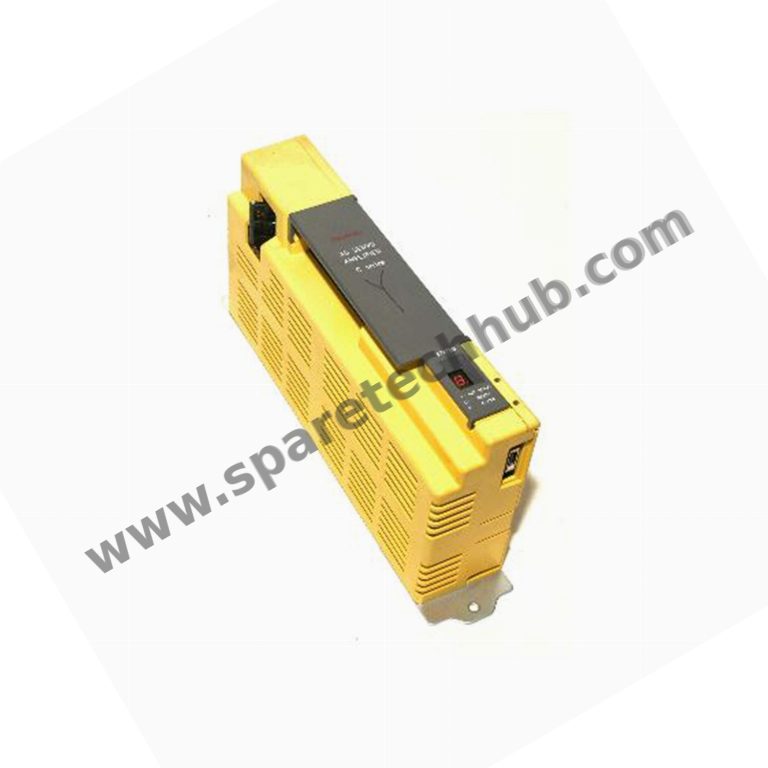
| AC servo amplifier | FANUC A06B-6058-H005, A06B-6047-H004 | servo motors and drives |
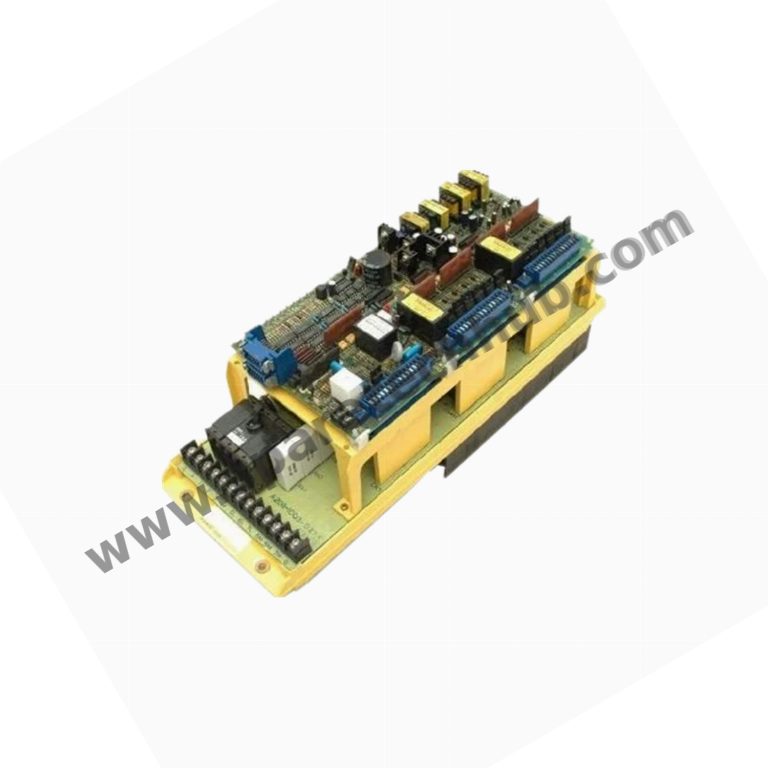
| Axis electronics / drive controller | FANUC A02B-0166-B501, 5 A | FANUC brand index |
| Servo motor, hygienic duty | B&R 8JSB33.ee045ffgg-0, 8JSQ42.ee035ffgg-0 | B&R brand index |
| Servo motor, 1FK7 class | Siemens 1FK7022-5AK71-1LH0 | Siemens brand index |
| Low-voltage AC drive | Schneider Altivar 310, 0.75 kW, Altivar 610, 160 kW | VFDs and inverters |
| Brake resistor / bleeder unit | ABB 3HAC037682-001, 3HAC032586-001 | ABB brand index |
| 24 V DC control supply | Siemens 6ES7307-1EA00-0AA0, Allen-Bradley 1606-XLS480E, ABB 560PSU02, Schneider ABL8RPS24100 | power supplies |
| Motor protection and start | soft starters and motor protection breakers across the ranges we list | motor controls and soft starters |
If a drive or axis failure is coming from a brand we do not carry, the honest answer is the same one we give on every servo page: send the part marking and we will confirm what can be sourced, at what lead time. Lead times in this category are the constraint that actually moves — our analysis of 2026 automation lead times put PLCs at 10–39 weeks and some sensor classes higher — and a five-day portal gap is trivial next to a fifteen-week amplifier. Where a new servo family is involved, our piece on Omron C6 order codes and the 1S overlap covers how order-code confusion, not vendor downtime, produces most wrong-part failures. Cable and connector substitutes for a re-engineered axis sit in extension cables.
Frequently asked questions
Did Yaskawa say how long its websites were down?
No. The restoration notice is dated 26 October 2026, 14:50 JST, and gives no start date or duration. The only firm anchor in the public record is the PHP security release of 21 October 2026, so the five-day figure people quote is an inference from that gap, not a vendor statement.
Was Yaskawa breached?
Yaskawa says not: its notice states that no unauthorised access, data leakage or other damage caused by exploitation of the vulnerability was found. That is a vendor statement about its own systems, published without a description of the assessment method, so treat it as the company’s position rather than an independent finding.
Is “PHP2Shell” the official name of the vulnerability?
No. The official identifiers are CVE-2026-109618 and CVE-2026-109619, both rated CVSS v4.0 9.2 and fixed in PHP 8.5.12, 8.4.27, 8.3.36 and 8.2.35. “PHP2Shell” is a nickname that circulated in security media and appears in some agency summaries; Yaskawa’s own notice refers only to “a PHP vulnerability”.
Do Yaskawa drives, servos or robots stop working because of this?
There is no evidence that they do, and nothing in Yaskawa’s notice suggests product impact — it concerns websites. The general caution is different: PHP is often embedded in appliances, gateways and edge devices where you cannot upgrade the interpreter yourself, and New Zealand’s NCSC specifically flagged that such implementations need a firmware fix from the manufacturer. If a drive or robot has an embedded web server, ask the vendor about that component rather than assuming a website notice covers it.
Does SpareTechHub sell Yaskawa parts?
No. Yaskawa is not in our catalogue, and we do not list SGD7S, SGDH, GA700 or MOTOMAN order codes. We hold servo amplifiers and motors from FANUC, B&R and Siemens, AC drives from Schneider Electric, bleeder and brake units from ABB, and control power supplies from four brands, all linked above. Send a part marking and we will tell you what is genuinely sourceable and what is not.
What is the single most useful thing to do this week?
Two, in this order. First, check your own web tier: any PHP-based portal, intranet app or vendor interface you depend on should be on 8.5.12, 8.4.27, 8.3.36 or 8.2.35, and anything older than a supported branch should be either patched or taken off the public internet. Second, save the four vendor documents your maintenance desk actually acts on — datasheet, terminal map, parameter list, discontinued-part cross-reference — into your own storage with revision dates, so the next portal gap costs you an afternoon instead of a line stoppage.
Sources
- Yaskawa Electric Corporation, “ウェブサイト再開のお知らせ / Notice of Website Restoration”, 26 October 2026, 14:50 JST (Japanese and English text on the same page).
- Yaskawa Global Site, “Notice of Website Restoration”, 26 October 2026.
- e-Mechatronics, discontinued models and recommended replacement models, and the site’s catalogue download area — both re-checked by us on 28 October 2026.
- PHP change log for PHP 8 — lists versions 8.5.12, 8.4.27, 8.3.36 and 8.2.35 under 22 October 2026, each recording fixes for GHSA-w8hw-w9fx-j79w and GHSA-6wmf-4rv5-p3rp.
- CISA Known Exploited Vulnerabilities catalogue — entries for CVE-2026-109618 (“PHP Memory Corruption Vulnerability”) and CVE-2026-109619 (“PHP Stale Internal Request-State Vulnerability”), both added 26 October 2026 with a 29 October 2026 due date.
- New Zealand National Cyber Security Centre alert on CVE-2026-109618 and CVE-2026-109619, updated 22 October 2026, including the note that embedded PHP in firewalls, edge devices and other appliances may require vendor firmware.
- NTV / YTV, coverage of PHP-vulnerability website suspensions across Kansai transport, universities and department stores, 22 October 2026.
- Sankei Shimbun, “Keihan takes homepage offline after PHP defect; Hanshin Electric Railway to follow”, 21 October 2026.
- ITmedia, account of the pre-embargo PoC disclosure and the PHP Foundation’s response, 22 October 2026.
- Wikipedia, “PHP2Shell” — used only as a round-up of the discovery timeline and the affected-service list, not as a primary source.
Talk to SpareTechHub
If a drive, amplifier or axis part on your critical list has no current source document — or you want the approved-equal table above built for your own plant’s machine classes — send us the part marking and the function it performs. We will confirm what we hold, what we can source, and where an alternate has to be engineered rather than swapped.