Omron has published model-level delivery estimates for the first time, and the numbers are not one headline figure. Its Japanese control-device site carries a notice titled 「新規ご注文の概算納期に関するご案内」 — Notice on estimated lead times for new orders — dated 29 October 2026, with a table headed “as of 29 October 2026”. Three E3T photoelectric sensor types sit at 4–6 months; the EE-SPX fork-type photomicrosensors at 3–4 months. Further down the same table, safety door switches, solid-state relays, remote I/O terminals and M12 connectors are quoted at 6 months or more.
The table matters to a spares buyer for a reason the headline figures hide: it is organised by catalogue code, not by product family, and it carries a quantity clause. Two sensors from one series can therefore have different lead times, and a large order can be slower than the band published for it. This page reproduces what Omron actually said, records what it did not say, and shows how to buy against it — including which sensing parts we can ship now.
In Short: What Omron Published on 29 October 2026
- Where: Omron Control Devices Japan (
fa.omron.co.jp), notice dated 2026-10-29. It is a rolling page — 「本情報は適宜更新いたします」, updated as needed, with no version history published. - Scope: new-order estimated lead times for Omron’s own stock catalogue items (弊社在庫品) across sensors, safety switches, relays, limit switches, connectors, controllers and network terminals — 47 line entries.
- E3T photoelectric sensors: 4–6 months for the three listed types — E3T-ST11/ST21 through-beam, E3T-FL11 background-suppression reflective, E3T-SL21 limited reflective.
- EE-SPX photomicrosensors: 3–4 months for the groove-type pre-wired codes EE-SPX302, 304, 305, 306 and 613.
- The shortest figure in the table is 2–3 months (EE-SX97 fork sensors, NX digital I/O units, several DRT2 terminals); the longest is “6 months or more”, applied to nine separate order-number groups.
- Stated cause: 「想定を上回る需要の増加」 — demand increase exceeding expectations. No factory, material or capacity explanation is given.
- No dates: the notice commits to working on “normalising lead times” but publishes no target date, no last-order date and no allocation policy.
- Japan-only: no English or global version of this notice was found on Omron’s European or global industrial sites as of 30 October 2026.
How the Notice Should Be Read
The opening paragraph apologises for shipping delays on “some products” caused by demand exceeding expectations, then states the scope in a line that is easy to skip: these are new-order estimates for stock items, and 「ご注文数によっては記載している目安よりもお時間をいただく場合がございます」 — depending on order quantity, an order can take longer than the figure shown. That single clause changes how the table should be used. It is a guide for a replenishment order of ordinary size, not a promise for a bulk buy, which means the intuitive response — placing one large order to cover eighteen months — is precisely the case the notice flags as unreliable.
The second section tells buyers where to check reality: some part variants can still ship immediately, so use Omron’s stock and standard-price lookup rather than assuming the family figure applies to your code. Read together, the two sections describe a supply position that is uneven rather than uniformly broken — which is exactly what the numbers show.
Table 1 — The Sensing Lines in Omron’s Notice
| Category | Series | Sensing type | Order numbers listed | New-order lead time |
|---|---|---|---|---|
| Photoelectric sensor (光電センサ) | E3T | Through-beam | E3T-ST11 / ST21 | 4–6 months |
| E3T | Background-suppression reflective | E3T-FL11 | 4–6 months | |
| E3T | Limited reflective | E3T-SL21 | 4–6 months | |
| Photomicrosensor (フォト・マイクロセンサ) | EE-SPX | Groove type, pre-wired | EE-SPX302 / 304 / 305 / 306 / 613 | 3–4 months |
| EE-SX67 | Thin type, connector | EE-SX670 / 671 / 672 / 673 / 674 | 4–6 months | |
| EE-SX77/87 | Thin type, pre-wired | EE-SX770 / 771 / 772 / 870 / 871 | 3–4 months | |
| EE-SX95 | Ultra-small, pre-wired | EE-SX951 / 952 / 953 / 954 / -R, 951P-R | 5–6 months | |
| EE-SX97 | Groove type, connector | EE-SX970-C1 / 974-C1 | 2–3 months |
Three things follow from reading the sensing block this way. First, “E3T 4–6 months” is a statement about three sensing methods, not the whole series: the E3T diffuse-reflective FD11 types and the retro-reflective SR types are not named, and absence from the list is neither a shortage nor a guarantee. Second, within one brand’s sensing catalogue the spread runs from 2–3 to 5–6 months, so a substitution that looks technically equivalent — swapping a connector-type fork sensor for a pre-wired one, or the reverse — moves you across lead-time bands. Third, the smallest and most specialised parts (EE-SX95 ultra-small at 5–6 months) are the slowest, which is the opposite of the assumption that simple, high-volume sensors get priority.
Table 2 — Everything Else in the Same Notice
| Category | Series and order numbers | New-order lead time |
|---|---|---|
| Safety door switch, sollock | D4SL-N2FFA-D / N2NFA-D4 | 6 months or more |
| D4SL-N2NFA-D · D4SL-N2NFG-D · key units D4SL-NK3 / NSK10-LKH | 3.5–4.5 · 5–6 · 3.5–4.5 months | |
| Safety door switch | D4NS-2BF / 1DF | 2.5–3.5 months |
| Safety controller | G9SX-AD322-T15-RT DC24 · G9SX-NSA222-T03-RT DC24 | 3–4 · 2.5–3.5 months |
| Leak-detection tape | F03-20 / 20T · F03-16PE 50M / 100M · F03-16SFC-10M | 3.5–6 months · 6 months or more |
| Leak detector | K7L-AT50 · K7L-AT50D · K7L-AT50DP | 3–4 · 3–4 · 6 months or more |
| Limit switch | D4C-1227-P / 4224-PG1 · Z-15GQ-B and related Z types | 4–5 · 2.5–3.5 months |
| M12 circular connector | XS2C-D422 · XS2F-A521-S103 | 6 months or more · 3–4 months |
| Emergency-stop pushbutton | A22E-M-02 (non-illuminated, twist release, 2NC) | 4–5 months |
| Relays and solid-state | G3DZ-F4B DC24 · G3TA-IDZR02S-US DC5-24 · G3PE-245B DC12-24 | 6 months or more (each) |
| G6B-47BND DC24 · P2RFZ-08 socket · LY4N DC24 | 3–4 · 3–4 · 4–5 months | |
| Machine-control I/O | NX-AD3603 / AD4604 · NX-ID5342 / OD6121 · NX-ECC202 · NX-CIF210 | 5–6 · 2–3 · 2.5–3.5 · 2.5–3.5 months |
| NX-EIP201 EtherNet/IP · NX-SID800 / SOD400 · NX-SIH400 V1.1 safety | 5–6 · 5–6 · 5–6 months | |
| DeviceNet terminals | DRT2-AD04H · ID16ML · ID16S-1 · ID08C-1 · TS04T · ROS16 · MD32B | 4–5 · 3–4 · 2–3 · 2–3 · 3–4 · 6 months or more · 2–3 months |
| DeviceNet peripherals | DCA1-5CNC5F1 / 5CN02F1 / 5CN03F1 · DCA1-5CS01W1 | 6 months or more · 3–4 months |
This is the part a sensor-only headline loses. The worst-affected lines in Omron’s own table are mostly not sensors: the “6 months or more” band is populated by a safety interlock, a leak-detection tape, an M12 connector, three relay types, a remote I/O terminal block and a DeviceNet cable assembly. Sensing parts sit in the middle of the distribution. For a maintenance department that ordering matters, because safety interlocks and e-stop devices carry a duty — a guard light curtain or a door switch on a machine guard is not a part you can run short on while you wait, and a failed leak-detection line is an environmental event, not an inconvenience.
Why the Quantity Clause Is the Real Planning Risk
Most lead-time news is read as a signal to buy ahead. Omron’s own wording cuts against that. If an order larger than an ordinary replenishment quantity can take longer than the published estimate, then a panic buy of two hundred E3T-ST21 amplifiers does not buy you two hundred sensors in four months — it may buy you a slower slot and a larger cash commitment. The practical response is the opposite: split the coverage, and hold the split across different sensing methods rather than concentrating on one code.
A second consequence is that the notice gives no basis for a last-time-buy decision at all. There is no expiry date, no allocation policy and no statement that the situation is deteriorating; the notice says the company is working on normalisation. Buyers therefore have to plan against a range of outcomes rather than a forecast — which is a stocking-policy question, not a purchasing-sprint question.
Table 3 — Where the Same Sensing Job Can Be Done From Stock
Omron has no product pages on this site and we do not hold its catalogue, so the honest substitute map is by sensing job, not by part number. Below, every linked item is a live listing we can quote.
| Omron line in the notice | What the part actually does | Equivalent role we can ship |
|---|---|---|
| E3T-ST11 / ST21 (4–6 months) | Through-beam photoelectric in a miniature housing with built-in amplifier | ifm OGE500 through-beam; Keyence PZ-G101CB and the rest of the PZ-G built-in-amplifier range |
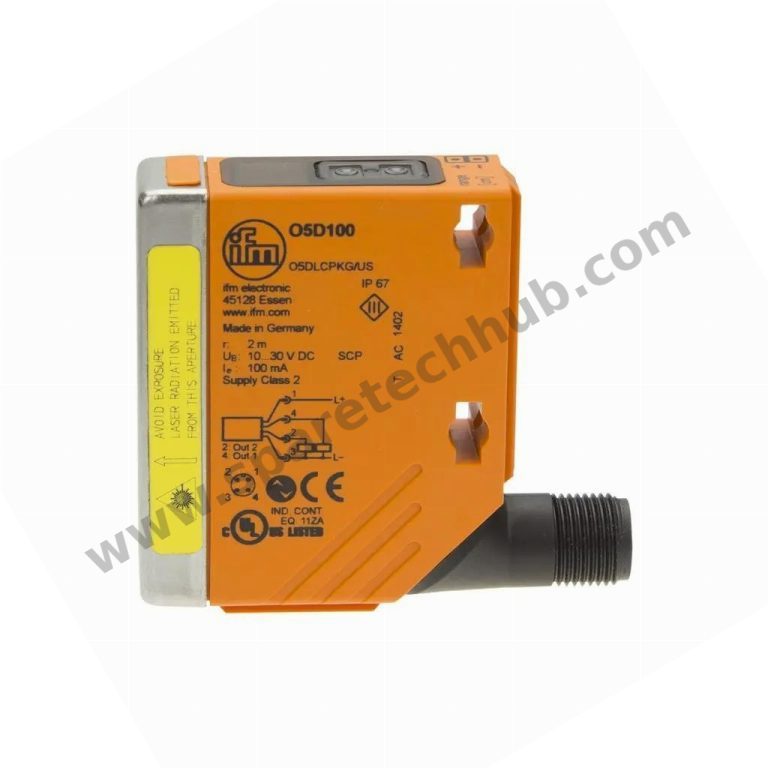
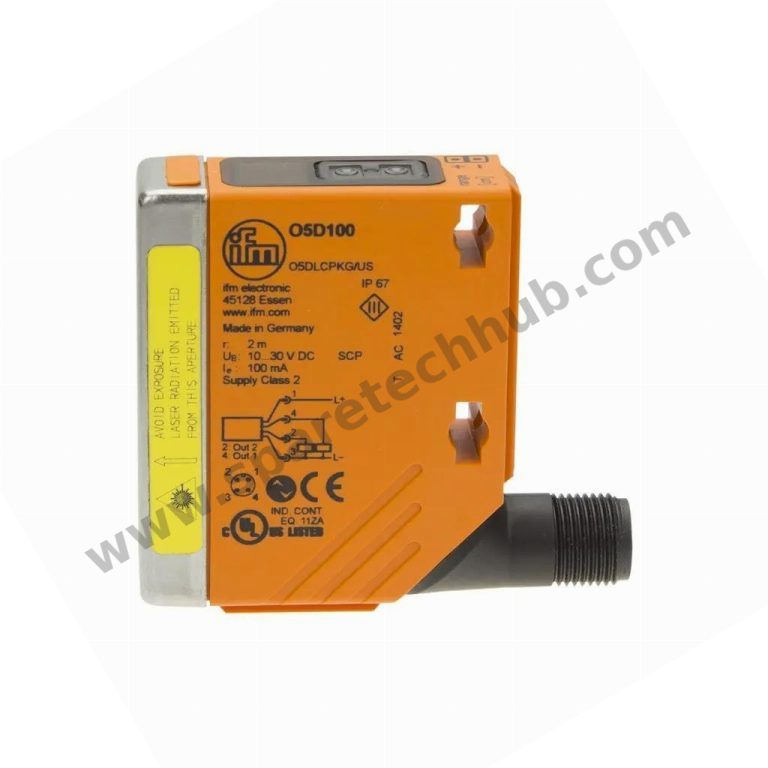
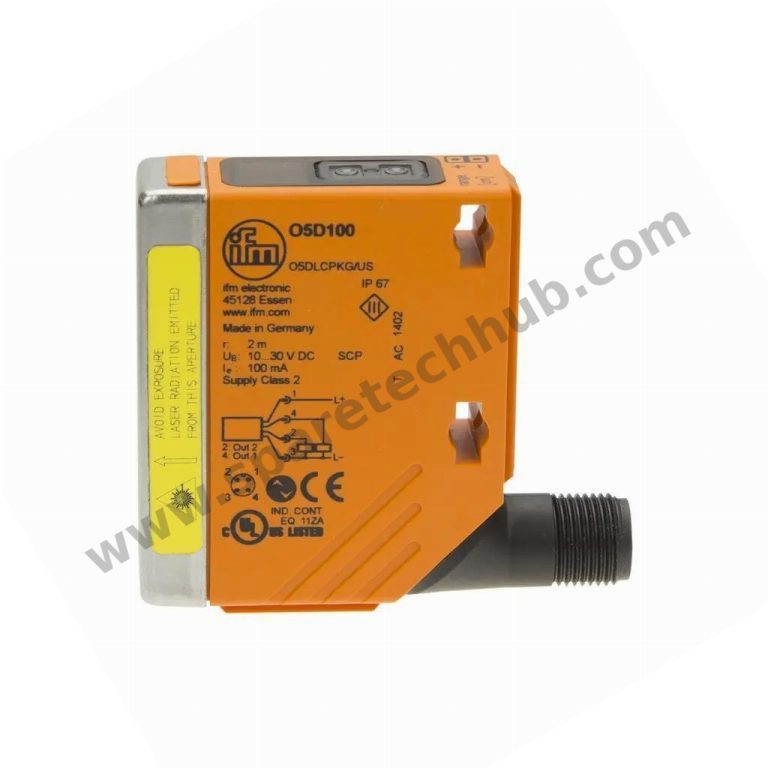
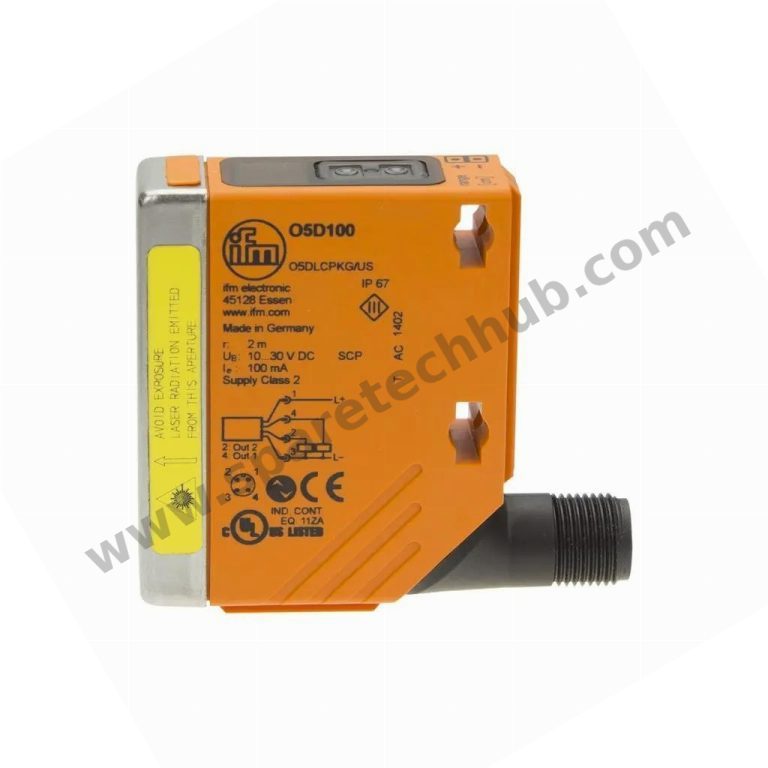
| E3T-FL11 (4–6 months) | Background-suppression reflective — detects at a set distance, ignores the background | ifm OGH200 (15–250 mm); ifm O5D100 and OID200 distance sensors |
| E3T-SL21 (4–6 months) | Limited reflective — short fixed-range detection | ifm O5H500 diffuse; Keyence PZ-G41N; Keyence LR-ZH500N CMOS photoelectric |
| EE-SPX302/304/305/306/613 (3–4 months) | Fork or slot photomicrosensor for small-part counting and edge detection | No fork-type listing in our catalogue. The nearest jobs are done with Keyence FU-51TZ through-beam and FU-47TZ reflective fibre units run from an FS-N40 amplifier |
| EE-SX95 / EE-SX97 (5–6 and 2–3 months) | Ultra-small and miniature slot sensors | Keyence LR-Z series compact CMOS sensors, e.g. LR-ZB100P and LR-ZB240CB |
| D4SL / D4NS safety switches (2.5 months to 6+) | Guard interlocking with sollock or key actuation | Keyence GS-10PC non-contact safety interlock; SICK C4C-SA10530A10000 deTec4 safety light curtain; GL-S safety light curtains |
| G9SX safety controllers (2.5–4 months) | Safe output switching from safety sensors | ifm G1501S safety relay module; ifm GF711S safety inductive sensor |
| XS2 M12 connectors (3–4 months to 6+) | Field-wirable sensor cabling | ifm E11252 and EVF566 M12 sockets; SICK DOL-1208-G05MAC1 sensor-actuator cables; connectors and cables |
| G3DZ / G3TA / G3PE relays (6 months or more) | Switching and isolation between control and load | GE IC693MDL930 isolated relay output; IC200MDL940B relay output module |
Two caveats belong on the record. Keyence does not publish lead times and sells through its own regional offices, so a “we can ship it” statement here is about our stock and quote turnaround, not a factory promise. And a substitution is only valid if the sensing method, range, output type (NPN or PNP), housing size and connection style match — the FS-N41N and FS-N41P pair exists precisely because NPN and PNP are not interchangeable at the terminal.
Table 4 — What a Spares Buyer Should Do, Line by Line
| If your situation is… | Action | Why |
|---|---|---|
| You hold E3T or EE-SPX on a running line | Check the exact catalogue code in Omron’s stock and standard-price lookup before acting on the family figure | The notice itself says some variants still ship immediately; the table is a per-code statement |
| You are planning one bulk order to lock in supply | Split it — a replenishment quantity now, a second tranche later | The published quantity clause makes large orders the least predictable case |
| You are weighing a technically equivalent substitute | Compare lead time and sensing method, slot width, wiring style and output type | Within Omron’s own sensing block the spread is 2–3 to 5–6 months, and connector versus pre-wired changes the band |
| Your short part is a safety interlock, e-stop or leak-detection line | Treat these as higher priority than sensors | They sit in the 6-month-or-more band and carry a duty-of-care consequence when they fail |
| You buy through a distributor outside Japan | Do not expect the notice to apply directly; check channel stock first | The notice is a Japan-market factory-direct statement; regional channels are not covered by it |
| You need a documented position for a customer or an audit | Cite the notice date (29 October 2026) and the specific rows, and record that it is a rolling page | The page updates without a version history, so an undated capture is the only evidence of what was published when |
What the Notice Does Not Say
- No end date and no normalisation target. The commitment is to continue working on it company-wide.
- No cause beyond demand. 「想定を上回る需要の増加」 — no factory, material, logistics or capacity detail.
- No version history. An earlier issuance of the same notice exists (page dated 5 August 2026), but its table has been replaced by a link to the October page, so the August numbers cannot be compared with the October ones from Omron’s site. Whether E3T improved or worsened since August is not published.
- No English or global equivalent found on Omron’s European or global industrial sites as of 30 October 2026.
- No statement about unlisted variants of the covered series — silence in the table is neither a guarantee of availability nor a declaration of shortage.
How This Reads Against the Wider Component Picture
Reporting through 2026 has described pressure in optoelectronic and sensing supply — including coverage in September 2026 of image-sensor capacity tightness at Sony, citing EE Times China, and component allocation tables circulated in trade newsletters earlier in the year. None of that is Omron-specific, and none of it explains this notice: Omron attributes the situation to demand. What the wider picture does establish is that a 3–6 month band on catalogue sensing parts is not an isolated vendor event, and that buyers who treat one supplier’s notice as the whole problem tend to under-prepare. We found no comparable published lead-time table from SICK, ifm, Banner, Keyence, Balluff, Pepperl+Fuchs, Leuze or Contrinex for this period — which is itself worth recording, because it makes Omron the only one of those vendors currently publishing model-level numbers in any language.
For context on how this compares with the rest of the market, our earlier survey put PLC lead times at 10–39 weeks with sensors up to 60 weeks; Omron’s own table now sits inside that range rather than below it. Related single-brand sourcing notes on this site cover Omron C6 servo order codes and the 1S overlap and what to do when a vendor portal goes down mid-order.
Sensing Parts We Can Quote From Stock
We do not carry Omron — there is no Omron listing on this site, and we would rather say so than imply we can source an E3T. What we do hold is the neighbouring shelf: Keyence with 577 listings, SICK with 201 and ifm with 61, including the photoelectric sensors category, the LV-N digital laser sensor amplifiers with heads such as LV-NH100 and LV-NH300, the FU fibre units such as FU-53TZ, IG-1000 and IB-1000 DIN-rail amplifier units, and the EH separate-amplifier proximity heads (EH-110S, EH-440, EH-614A).
The same catalogue also covers the non-sensor lines in Omron’s worst band, which is where a mixed shortage tends to bite first: Keyence GL-S40SH and GL-S20FH safety light curtains, the SICK S30A-7021EK safety laser scanner and DT35S-B15551 safety distance sensor, SICK DOS-1208-GA01 distribution boxes, and cabinet-side parts such as the Schneider BMXCPS2000 and GE IC200PWR001 power supplies. Identification and measurement roles run through SICK CLV650-6120 and CLV620-0120 code readers, the DFS60B-S1MA10000 encoder and the ifm O1D100 and O1D102 laser distance sensors.
If you are working to Omron order numbers, send us the code and quantity: our parts catalogue and brand index list what is on hand, the SICK sensors and encoders guide covers the substitution logic for detection roles, and the guides index collects the rest. A quote request through the contact page is the fastest way to find out whether a sensing job can be covered without waiting on a Japanese production slot; the FAQ explains how condition grading and lead times work on our side, and more supply news is in the news index and the buying-guide archive.
Frequently asked questions
Are Omron E3T photoelectric sensors on a 4–6 month lead time?
For the three types Omron lists — E3T-ST11 and ST21 through-beam, E3T-FL11 background-suppression reflective and E3T-SL21 limited reflective — yes: the notice dated 29 October 2026 quotes 4–6 months for new orders. The figure is a factory-direct estimate for stock catalogue items in Japan and can be longer for large order quantities. Other E3T types are not named in the table.
What is the lead time for Omron EE-SPX fork sensors?
3–4 months for the groove-type pre-wired codes EE-SPX302, 304, 305, 306 and 613, according to the same notice. The connector-type photomicrosensor families sit in different bands in the same table: EE-SX97 at 2–3 months, EE-SX67 at 4–6 months and EE-SX95 at 5–6 months.
Is Omron discontinuing E3T or EE-SPX?
No. The notice is about delivery time, not lifecycle. Both series are described as stock catalogue items and remain listed in Omron’s current catalogues; nothing in the notice or on the product pages indicates a phase-out or a successor.
Which Omron products have the longest lead times in this notice?
Nine order-number groups are quoted at “6 months or more”, and most are not sensors: the D4SL-N2FFA-D and N2NFA-D4 safety door switches, F03-16PE and related leak-detection tapes, the K7L-AT50DP leak detector, the XS2C-D422 M12 connector, the G3DZ-F4B, G3TA-IDZR02S-US and G3PE-245B relays, the DRT2-ROS16 remote I/O terminal and the shielded DCA1 DeviceNet cables.
Does the Omron lead-time notice apply if I buy outside Japan?
Not directly. The notice is published on Omron’s Japanese control-device site and describes new-order estimates from Omron’s own stock. Distributor and regional-channel availability is a different question, and catalogue listings checked outside Japan were still showing same-day to three-week delivery for these part numbers. Treat the notice as a leading indicator for channel supply, not as a quotation.
How long will the extended lead times last?
Omron does not say. The notice commits to working toward normalisation and states that it will be updated as needed, but it publishes no target date, no last-order date and no allocation policy. The earlier issuance of the same notice, dated 5 August 2026, no longer shows its own table, so there is no published basis for saying whether the situation has improved or worsened since then.
Sources
- Omron Control Devices Japan — 新規ご注文の概算納期に関するご案内, notice dated 2026-10-29
- Omron Control Devices Japan — same notice, earlier issuance dated 2026-08-05
- Omron — 在庫状況 / 標準価格 照会 (stock and standard-price lookup)
- Omron — 光電センサ (photoelectric sensors) category
- Omron — フォト・マイクロセンサ (photomicrosensor) category
- Omron Europe — E3T product page
Talk to SpareTechHub
Tell us the Omron order number, the quantity and the date the line needs it. We will tell you plainly whether that part is inside our catalogue — for Omron the answer is no — and, if the sensing role can be covered from what we hold, which code does it and how fast it ships. Start from the contact page or browse the parts catalogue.
All figures on this page were read from Omron’s published notice on 30 October 2026. Where the notice is silent — end dates, causes beyond stated demand, regional applicability, unlisted variants — that silence is recorded rather than filled in.