IDC circulated its first China industrial control agent technology assessment on 4 November 2026, with the document itself dated October 2026. The vendor-side coverage of that release says Siemens’ Eigen Engineering Agent took the highest rating on six dimensions. The primary IDC summary describes something narrower and considerably more useful: eleven dimensions grouped under four layers, each scored independently on a 1 to 5 scale, with no weighting and no composite score, applied to five vendors whose products represent four different technical paths.
That distinction changes what the report can be used for. It is not a league table, and IDC says so in the release. It is a capability map, and the most interesting thing on it is not where the leader sits but where the whole market is short: engineering execution loops, independent behaviour verification, exception and regression testing, a standardised commercial product form, and a quantifiable return. Those five gaps are also the five places where a spares desk, not a software licence, decides how long a line stays down.
In short: what is confirmed and what is not
- The framework is eleven dimensions, not six. IDC groups them under engineering capability, product capability, business value and delivery assurance, scores each 1 to 5 independently, and states plainly that no weights are applied and no composite score is calculated.
- Five vendors were assessed. Beckhoff, Hualong Xunda, Wasom, Siemens and Yuanshan, listed by IDC in pinyin order, mapped to four product paths.
- The per-vendor star matrix is not in the public summary. The six five-star ratings attributed to Siemens come from vendor-facing coverage of the report; the IDC release we can read names the dimensions and the vendors, not a published score grid.
- Three of the metrics quoted in circulation are not dimension names. Knowledge-base accumulation, complex process code generation and simulation verification do not appear as scored dimensions; the nearest real ones are control-code and engineering-asset generation and verification quality and engineering reliability.
- “Developed independently by Siemens China” is not supported. Siemens materials present Eigen Engineering Agent as a global product whose China launch followed in July 2026; the China-local new-product batch announced at the 2026 China International Industry Fair did not include it.
- IDC does not say the technology is production-proven. The release says the opposite in substance: the market is early, many products remain at suggestion, snippet generation or limited tool calling, and the ability boundary being tested is whether a product can produce a control project that is importable, compilable, verifiable and maintainable.
- Every efficiency number attached to Eigen is vendor-reported. Two to five times faster execution, up to 50 percent engineering efficiency gain, up to 80 percent solution-quality improvement, more than 100 companies across 19 countries: all published by Siemens, none with a methodology in the material we can access.
- The two third-party survey figures are about priorities, not performance. In the 2026 IDC discrete-manufacturing agent survey, 82 percent of respondents rank reliability first and 70 percent rank task accuracy first, both well above generation speed.
What IDC actually assessed
The definition in the release is worth reading before any score. IDC calls an industrial control agent a product that faces the engineering software behind PLCs, DCS and SCADA; that understands process requirements, point lists, drawings and the existing project context; that calls professional engineering tools to complete control code, hardware configuration, HMI and SCADA assets, verification and delivery tasks; and that forms a reviewable closed loop under the supervision of a human engineer.
The market boundary is then stated as a test rather than a category: can the product generate a control engineering project that is importable, compilable, verifiable and maintainable. IDC notes that products in this market label themselves Copilot, CoAgent or Agent regardless of where they sit against that test – some have a commercial version sold globally, some are at customer-trial stage, and some are still validated as internal pilots or custom projects.
The eleven dimensions, in the report’s grouping
| Layer | Dimension | What it is testing |
|---|---|---|
| Engineering capability | Engineering requirements and project understanding | Whether the agent can read a spec, a point list or an existing project and infer the task correctly |
| Engineering capability | Control code and engineering asset generation | Whether output is a real, structured engineering object rather than a code fragment in a chat window |
| Engineering capability | Tool execution and engineering closed loop | Whether the agent drives the actual engineering software and completes the loop, not just proposes text |
| Engineering capability | Verification quality and engineering reliability | Whether results are checked before they reach a controller, and whether the checking is credible |
| Engineering capability | Engineering integration and open extension | Interfaces – API, SDK, MCP, CLI, object model – that let the agent sit inside an existing tool chain |
| Engineering capability | Engineering and production operations coordination | Whether engineering-side object semantics connect to runtime data, faults and maintenance handover |
| Product capability | Productisation maturity | Whether this is a shippable commercial product or a project-shaped demonstration |
| Product capability | Deployment and usage experience | How it is installed, accessed and used day to day by an ordinary engineering team |
| Business value | Real application and value validation | Deployed reference cases with a measurable outcome, not a pilot anecdote |
| Delivery assurance | Safety, trust and change governance | Permissions, audit, rollback and the discipline of change control on production code |
| Delivery assurance | Customer service and delivery assurance | Who supports it, how fast, and what happens when it fails at 2 a.m. on a weekend |
Where the six five-star ratings sit
Read against that grid, the six dimensions named in Siemens’ coverage of the report are the ones a well-funded original-equipment vendor would be expected to lead: code and asset generation, verification quality and reliability, safety and change governance, productisation maturity, deployment and usage experience, and customer service and delivery assurance. The five where the same coverage does not claim the top rating are project understanding, tool execution and the engineering closed loop, integration and open extension, engineering-to-operations coordination, and real application and value validation.
| Dimension | Claimed top rating for Siemens | Why the pattern is coherent |
|---|---|---|
| Control code and engineering asset generation | Yes | Directly demonstrated: SCL and LAD generation, logic adaptation, test-routine creation, compile-error repair |
| Verification quality and engineering reliability | Yes | Siemens describes self-validation through multi-step reasoning and self-correction; note this is the generator checking itself |
| Safety, trust and change governance | Yes | Vendor-controlled environment makes permissions, preview and rollback tractable |
| Productisation maturity | Yes | Commercially available, bundled capability updates rather than per-feature procurement |
| Deployment and usage experience | Yes | Runs inside TIA Portal, the environment the target user already has |
| Customer service and delivery assurance | Yes | Incumbent global support organisation behind the automation portfolio |
| Engineering requirements and project understanding | Not claimed | Hardest problem in the field and the one least amenable to vendor control |
| Tool execution and engineering closed loop | Not claimed | IDC names this as the industry-wide shortfall, not a single-vendor shortfall |
| Engineering integration and open extension | Not claimed | Requires stable machine-level interfaces to the IDE; IDC makes this its first trend |
| Engineering and production operations coordination | Not claimed | Crosses the engineering-to-runtime boundary most plants have not opened |
| Real application and value validation | Not claimed | Needs independent, quantified outcomes; vendor-reported figures do not close it |
Four statements in the circulation that need checking
| Statement being repeated | What the primary material shows |
|---|---|
| Six core metrics, all five-star, the highest rating | The report has eleven dimensions in four layers, each on a 1 to 5 scale, explicitly unweighted with no composite score. Six is a subset of eleven, and the public release does not publish a per-vendor grid. |
| The metrics were knowledge-base accumulation, complex process code generation and simulation verification | None of the three is a dimension name. Code generation maps to control code and engineering asset generation; verification maps to verification quality and engineering reliability; knowledge-asset reuse appears as the second of IDC’s five forward trends, not as a scored dimension. |
| Independently developed by Siemens China | Siemens presents Eigen Engineering Agent as a global product with capabilities shipped to all users, including ECAD integration reading XML and AML and standards-compliant project generation against the Siemens Automation Framework. Siemens China material describes a July 2026 China market launch and hundreds of local manufacturing customers. The China-local innovation batch at the 2026 Industry Fair – 13 products of more than 20 announced – did not list Eigen; Eigen appeared there as a feature update. |
| Marking practical deployment of large models in low-level PLC programming and line commissioning | IDC’s own baseline says the market is early: basic requirement handling, code generation and conventional service support exist, while execution loops, independent behaviour verification, exception and regression testing, standardised product form and quantifiable ROI are the industry’s main weaknesses. |
One smaller correction travels with the title. The report is circulated as 《中国工业控制智能体技术评估,2026》 in IDC’s release and referenced under a slightly different name in vendor material, and the document is dated October 2026 while the announcement went out on 4 November 2026. Anyone citing this report in a procurement file should cite the document number rather than the press title.
The five vendors and four technical paths
| Path | Vendor and product | Public evidence of capability |
|---|---|---|
| Deep integration into the original IDE | Siemens – Eigen Engineering Agent | Generates SCL and LAD, adapts existing logic, creates test routines and fixes compile errors; works from the objects in the user’s own TIA Portal project – function blocks, user data types, HMI screens and their relationships |
| Deep integration into the original IDE | Beckhoff – TwinCAT 3 CoAgent for Engineering | Natural-language engineering dialog backed by specialised agents for PLC, I/O, HMI and the Beckhoff Information System; supports cloud and local models and exposes MCP so customer knowledge bases, ERP and databases can be attached as servers; results stay behind human review, confirmation and approval |
| Agent-native engineering platform | Wasom – WasomCodeX V2.0 | Rebuilds the industrial IDE and engineering workflow around the agent rather than bolting an agent onto an existing one |
| Cross-brand, scenario-based | Yuanshan – INOS Claw | Targets heterogeneous brownfield plants with scenario agents across systems and industries – the path most exposed to the integration dimension |
| Own controller plus own engineering environment | Hualong Xunda – JIC IAP built-in AI programming assistant | Full-stack coherence because the controller and the development environment are the same vendor’s |
What the industry-average baseline says is missing
IDC built an average-capability baseline alongside the vendor set, and the shortfalls it names are specific enough to be actionable:
- Engineering execution loop. Most products stop at suggestions, fragments or limited tool calls instead of driving the engineering software to a completed, compiled, tested result.
- Independent behaviour verification. The release states the principle bluntly: a compile that passes is not a logic that is reliable. IDC expects a separate evaluation regime covering normal sequence, boundary conditions, disconnection and restart, sensor anomalies and interlock conflicts.
- Exception and regression testing as a standing part of the workflow rather than a manual afterthought.
- A standardised commercial product form – several offerings in this market are still project-shaped.
- Quantifiable return. Without a baseline and a measurement method, efficiency claims cannot be audited.
The survey numbers explain why the last two matter. Asked in 2026 what they look for in a manufacturing agent, 82 percent of discrete-manufacturing respondents put reliability first and 70 percent put task accuracy first, both ahead of generation speed. IDC’s senior research manager for China manufacturing, Yanze Du, frames the same point in the release: the value of a control agent is not how much code it produces but whether it connects industrial knowledge, historical engineering assets, professional tools and verification mechanisms into a loop that can be reviewed, recovered and delivered.
Vendor numbers versus third-party numbers
| Figure in circulation | Source | Status |
|---|---|---|
| Two to five times faster execution than manual workflows | Siemens | Vendor-reported; no method or sample published in the material we can access |
| Up to 50 percent engineering efficiency gain | Siemens | Vendor-reported, and stated as an upper bound |
| Up to 80 percent improvement in overall solution quality | Siemens | Vendor-reported; the metric definition is not published |
| More than 100 companies across 19 countries | Siemens | Vendor-reported adoption statement |
| Up to 50 percent shorter program development time, plus multi-axis drive configuration | Siemens China, 2026 Industry Fair release | Vendor-reported product-update claim |
| Hundreds of local manufacturing customers since the July 2026 China launch | Siemens China | Vendor-reported, no named references |
| 82 percent reliability first, 70 percent task accuracy first | IDC 2026 discrete-manufacturing agent survey | Third-party survey of buyer priorities; sample size and region split are not in the public summary |
| Six five-star dimension ratings | Vendor coverage of the IDC report | Not verifiable from the public IDC release, which does not publish the score grid |
What an agent actually changes in the workflow
Stripped of ratings, the two best-documented products in this report point at the same set of workflow changes, and they are concrete enough to evaluate.
On the Siemens side, the published capability list covers generating SCL and LAD and repairing compile errors; working from the objects already inside a TIA Portal project rather than from general knowledge; reading electrical design files in XML and AML to add devices, configure connections and generate tags that match the real hardware topology; turning a plain-language machine description into a project that follows the Siemens Automation Framework and opens directly in TIA Portal; generating and integrating JavaScript for WinCC Unified HMI behaviour and migrating classic VB scripts; and configuring drives, devices and PROFINET topology from spreadsheet imports. See the Siemens insight page and the TIA Portal product page.
On the Beckhoff side, TwinCAT CoAgent is described as a multi-agent architecture with a planner and gateway coordinating specialised PLC, I/O, HMI and information-system agents, support for both cloud and local large models, and MCP servers so a customer’s own knowledge base, ERP or database can be attached. The governance language is the same as IDC’s: the responsible specialist reviews, confirms and approves every generated result before execution.
Note what both descriptions stop short of. Neither claims an independent verifier that is separate from the code generator, and neither publishes a behaviour-test suite for interlock conflicts or restart-after-disconnect. That is precisely the gap IDC identifies as the admission requirement for production use.
Why faster engineering does not shorten a downtime
This is where a buyer without a software licence still needs to read the report carefully. Agents that generate compliant projects and repair compile errors compress engineering hours. They do not change the failure rate of a 24 V supply that has been running since 2011, and they do not change the fact that the machine on your floor is programmed for a CPU whose spare part has been out of production for a decade.
The arithmetic that governs downtime is unchanged: a control project that is written 40 percent faster still has to be downloaded into hardware that either exists or does not. Our own lead-time work shows the same asymmetry – factory-new PLC CPU lead times in 2026 run from roughly 10 to 39 weeks depending on family, sensors reach 60 weeks, and the moment a part is obsolete the conversation moves entirely to the secondary market. Read PLC Lead Times 2026 before believing any claim that software changes availability.
The second-order effect is real but different: faster project generation increases the rate of change reaching controllers, which raises the value of exactly the governance dimensions the report scores – change control, rollback, audit – and raises the demand for the physical components that carry those changes. A cabinet that gets a hardware revision every quarter needs its motor control and soft starter line, its 24 V supplies and its switching and protection parts re-verified, not just its program.
What a spares desk should do with this report
| Installed reality | What the agent wave changes | What still decides your downtime |
|---|---|---|
| Siemens S7-300 and S7-400 stations programmed in TIA Portal or STEP 7 | New logic can be produced and validated faster, and legacy project comprehension is one of the published use cases | Whether the 6ES7307-1EA00-0AA0 supply and the interface modules behind it are on the shelf |
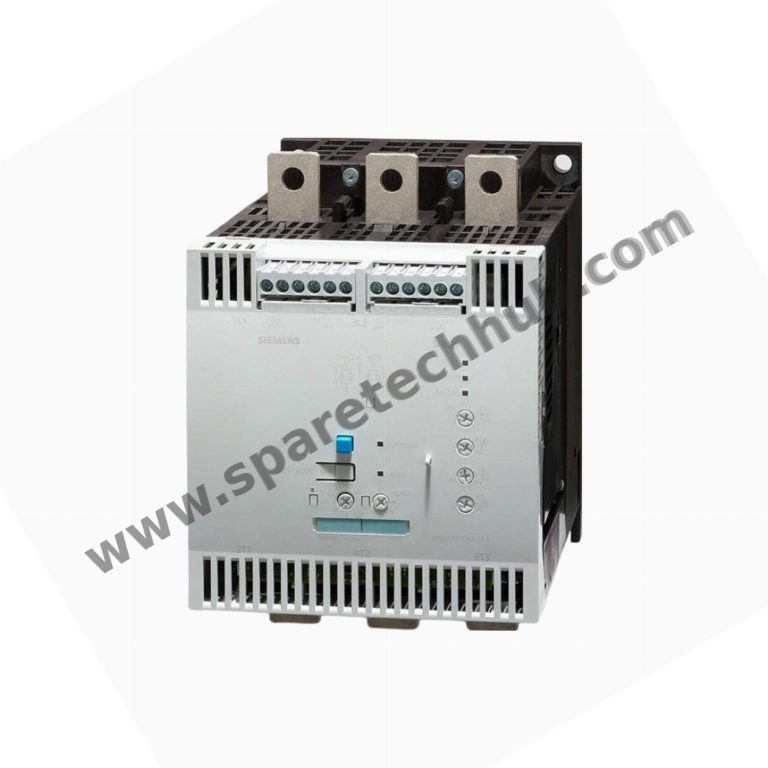
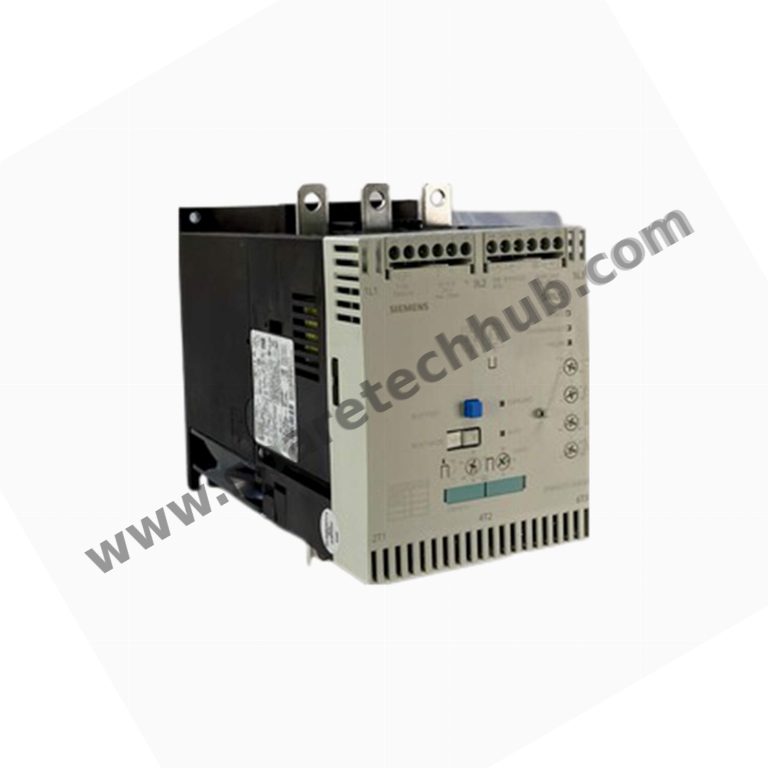
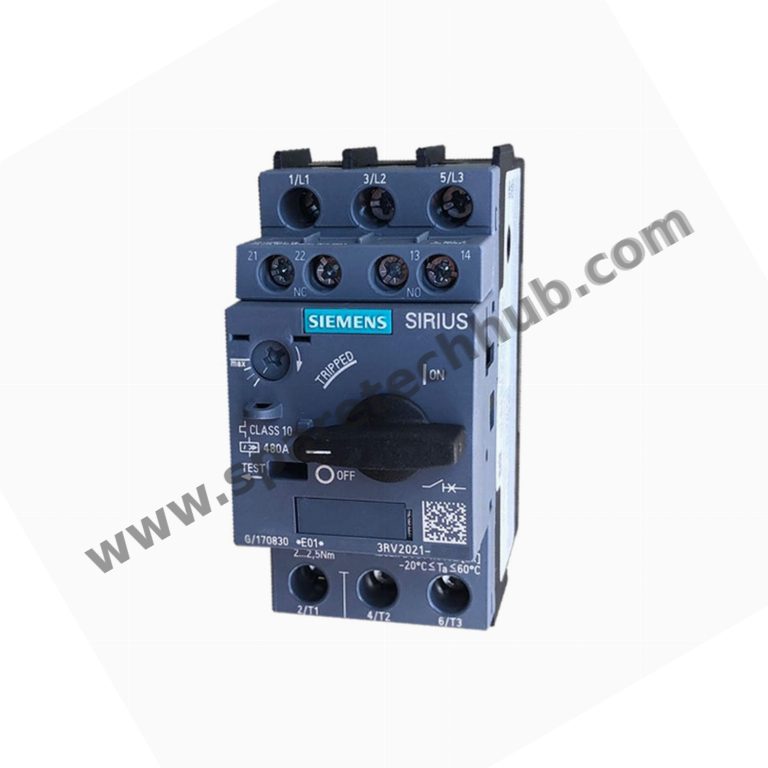
| Motor feeders built on SIRIUS components | Drive and device configuration from spreadsheet import reduces engineering error rates | Spares for the 3RW4055-6BB44, 3RW4073-6BB44 and 3RW4076-6BB44 soft starters and the matching 3RV6021-4CA15 motor protection breaker |
| Multi-brand cabinets: Schneider Modicon, GE Series 90-30, Allen-Bradley | Cross-brand agents are the path Yuanshan represents; none of the assessed products rewrites your I/O map for free | Availability of Modicon Quantum, Series 90-30 and Advantys STB parts, and the TM5 controller and TM5 digital output modules that replaced them |
| Servo and motion assets | Multi-axis configuration capability is an announced feature update, not a machine retrofit | Whether a 1FK7 servo motor and its drive family can be sourced this week |
| HMI and SCADA screens | JavaScript generation and VB script migration shorten the repetitive part of screen work | Touchscreen and panel hardware swaps, which still follow the checks in Five checks before swapping an HMI touchscreen |
Two of our other pieces cover adjacent ground: Siemens Bets 1 Billion Euro on Industrial AI sets out the investment context behind the Xcelerator tooling this agent sits in, and CIIE 2026 Opens with 480 Global Debuts covers the most recent China launch event. For the vendor-independent side of the same question, see Omron Acquires OnLogic for 675 Million Dollars and Beijer Nexto XF: CODESYS, Linux, Docker.
A checklist for evaluating an agent claim
- Ask for the dimension grid, not the headline. If a vendor claims six five-star ratings, ask which five dimensions are not five-star and what the industry average is on each.
- Confirm whether the assessment covers the product version you are buying. Feature updates in this category ship quarterly, and a report dated October 2026 describes a snapshot.
- Ask who performs verification. If the code generator also validates its own output, treat verification quality as a self-reported score and require an independent test.
- Require behaviour tests, not compile tests: normal sequence, boundary conditions, disconnection and restart, sensor fault injection, and an interlock conflict that must be refused.
- Check the change path. Preview by default, explicit apply, tiered permissions, stop on failure, and a rollback that a second engineer can execute.
- Ask how your own standards are enforced – naming rules, function-block libraries, screen templates. IDC’s second trend is that the differentiator is reuse of customer engineering assets, not raw generation.
- Ask for the ROI baseline and the measurement window. Up to 50 percent is an upper bound on a vendor-selected project.
- Check the open-interface question: API, SDK, CLI, MCP and a stable object model. IDC makes IDE openness the first variable deciding whether a product joins your existing tool chain.
- Then, and only then, check the hardware plan: which parts in the affected cabinet are obsolete, which have a secondary-market supply, and what the reorder point is. Our guide to reading a PLC part number before you buy spares and the note on surplus versus refurbished automation parts cover that step.
Frequently asked questions
What did IDC actually rate in its first China industrial control agent report?
Eleven dimensions grouped under four layers: engineering capability, product capability, business value and delivery assurance. Each dimension is scored independently from 1 to 5. IDC states in the release that no weights are applied and no composite score is calculated, so the report is a capability map rather than a ranking.
Which companies were assessed?
Five vendors, listed by IDC in pinyin order: Beckhoff with TwinCAT 3 CoAgent for Engineering, Hualong Xunda with the JIC IAP built-in AI programming assistant, Wasom with WasomCodeX V2.0, Siemens with Eigen Engineering Agent, and Yuanshan with INOS Claw. IDC maps them to four paths: deep integration into the original IDE, an agent-native engineering platform, a cross-brand scenario approach, and an own-controller plus own-environment stack.
Is the six five-star rating for Siemens a composite award?
No. Six is a count of individual dimensions out of eleven, and the report itself publishes no composite score. The per-vendor score grid is inside the paid document, so the six-dimension figure can be traced to vendor coverage of the report rather than to the public IDC summary.
Does the report say AI can now program PLCs for production use?
The opposite. IDC describes the market as early stage, with most products still at suggestion, fragment generation or limited tool calling, and names the execution loop, independent behaviour verification, exception and regression testing, standardised product form and quantifiable return as the main industry gaps. Its boundary test is whether a product can deliver a control project that is importable, compilable, verifiable and maintainable.
What do the 82 percent and 70 percent figures measure?
Buyer priorities, not product performance. In the 2026 IDC discrete-manufacturing agent survey, 82 percent of respondents rank reliability first when evaluating an agent and 70 percent rank task accuracy first, both ahead of generation speed. The sample size and regional split are not published in the release summary.
Does a faster engineering tool change how I should stock spare parts?
Not directly. It raises the rate of change reaching controllers, which makes change control and rollback discipline more valuable, and it makes legacy project comprehension cheaper, which tends to extend the service life of older hardware rather than replace it. Downtime is still governed by part availability, so the reorder point on obsolete power supplies, soft starters and I/O modules is the number that matters.
Sources
- IDC, China Industrial Control Agent Technology Assessment 2026 release, distributed 4 November 2026 (document dated October 2026). m.sohu.com/a/1096987725
- Siemens China, 2026 China International Industry Fair product release, 13 October 2026. chuandong.com/news/news268417
- Siemens, Industrial AI impact on how engineers work. siemens.com/en-us/company/insights/
- Siemens, TIA Portal product page. siemens.com/global/en/products/
- Beckhoff, TwinCAT projects with AI-assisted engineering. beckhoff.com/en-us/products/
- World Artificial Intelligence Conference, Shanghai. worldaic.com.cn
- Industry coverage of the Siemens China embodied-AI factory programme. leaderobot.com/news/10238
- Wikipedia, IEC 61131-3. en.wikipedia.org/wiki/IEC_61131-3
- Wikipedia, Programmable logic controller. en.wikipedia.org/wiki/PLC
Talk to SpareTechHub
An agent can shorten the hours your engineers spend inside a TIA Portal project. It cannot shorten the hours your buyer spends finding a retired 6ES7 supply or a SIRIUS starter in the right rating. If a Siemens S7 power supply, a SIRIUS soft starter or motor protector, a 1FK7 servo, or the Schneider and GE equivalents that replaced them are what stands between a change and a running line, send us the order number, the quantity and the date the line needs it, and we will tell you plainly whether it is inside our catalogue and how fast it ships – and if it is not, we will say so instead of quoting something adjacent. Start from the contact page, browse the parts catalogue, or look at the Siemens brand page and the PLC and controller category.
All report content on this page was read from the IDC release distributed on 4 November 2026, the Siemens China Industry Fair release of 13 October 2026, the Siemens Eigen Engineering Agent insight page and the Beckhoff TwinCAT CoAgent product page, retrieved on 5 November 2026. The IDC document itself is paid and was not available to us; where the public summary is silent – the per-vendor score grid, survey sample size, methodology for any efficiency figure – the gap is recorded rather than filled in. Efficiency and adoption figures are attributed to the vendor that published them.